How To Choose Your First Recurve Bow
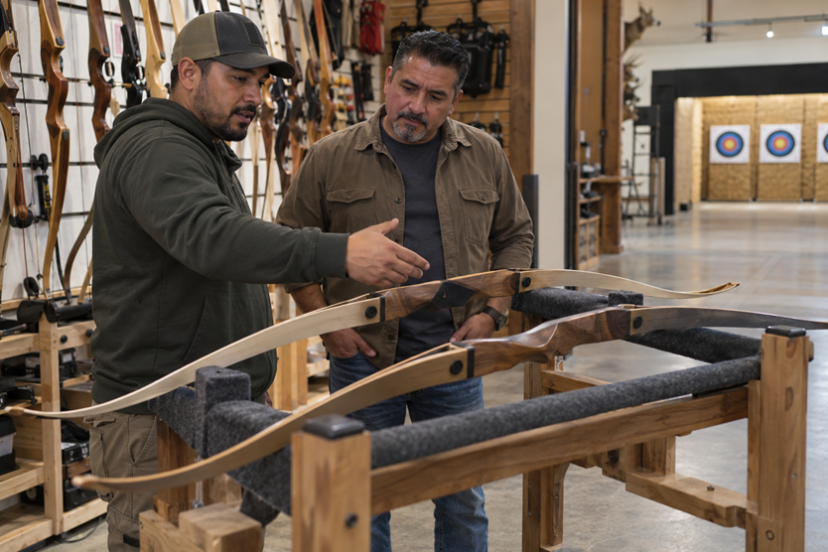
Choosing your first recurve bow is less about finding the most powerful or expensive bow and more about finding one you can control well enough to learn proper shooting form.
For most new target or recreational archers, a light-draw-weight takedown recurve that fits their draw length and handedness is a sensible place to begin. A takedown design also gives you the option of changing limbs later rather than replacing the entire bow as your strength and skills develop.
The Easton Foundations specifically recommends a light draw weight for a first bow and notes that adults may begin around 15–25 pounds. The organization emphasizes that lighter equipment allows new archers to develop technique and muscle memory without struggling against excessive resistance.
That makes your first question less about brand and more about fit:
Can I draw, anchor, aim, and let down this bow repeatedly while maintaining controlled form?
If the answer is no, more draw weight probably will not help.
What Matters Most When Choosing Your First Recurve Bow
Several specifications deserve much more attention than appearance, speed claims, or accessory count.
1. Start With A Draw Weight You Can Control
Draw weight describes how much force is required to bring the bow to a specified draw length.
A common beginner mistake is choosing a bow based on the heaviest weight someone can pull once. Recurve shooting requires repeating the draw throughout an entire practice session while maintaining posture, alignment, anchor, and release.
Easton Foundations recommends relatively light draw weights for beginning archers because excessive weight can interfere with learning correct technique.
The three examples in this guide illustrate reasonably modest starting configurations:
- Southwest Archery Spyder — 20 pounds
- Sanlida Noble — 22 pounds
- Samick Sage — 25 pounds
Those numbers should not be treated as universal recommendations. Your physical ability, draw length, prior instruction, and shooting form all matter.
A club or archery shop where you can shoot several draw weights before purchasing is especially useful. A coach can often identify excessive poundage quickly by watching your draw and alignment.
2. Match Bow Length To Your Draw Length
Overall bow length matters because your draw length affects how the bow feels and performs through the draw cycle.
A 62-inch bow is common among recreational takedown recurves, but that does not make 62 inches the correct length for every archer.
Easton Foundations provides draw-length-based guidance and notes that longer draw lengths generally call for longer recurve bows.
Manufacturer recommendations matter as well.
Southwest Archery says its 62-inch Spyder is designed specifically for archers with draw lengths under 29 inches and recommends its longer 64-inch Spyder XL for longer draws.
Samick lists the 62-inch Sage with a maximum draw length of 28 inches.
That makes draw length something to establish before choosing a bow rather than after it arrives.
3. Confirm Handedness Before Ordering
Recurve bows are normally sold in right-handed and left-handed configurations.
For a right-handed bow, the archer typically holds the bow with the left hand and draws the string with the right. A left-handed bow reverses that arrangement.
But your writing hand alone should not automatically determine the bow you buy. Eye dominance, comfort, coordination, and instruction may influence the choice.
Easton Foundations recommends matching a first traditional bow to the archer’s eye dominance as well as draw length and controllable draw weight.
If you have never shot a bow before, determining handedness during a beginner lesson can prevent an unnecessary return or replacement.
4. Takedown Construction Can Make Progression Easier
All three bows considered here use takedown construction.
A takedown recurve separates into:
- the riser
- upper limb
- lower limb
One major benefit is the ability to replace the limbs as your requirements change.
Instead of buying a heavy first bow because you expect to become stronger, you can begin with manageable limbs and move upward later.
That approach keeps progression tied to your form and control rather than an arbitrary timeline.
Southwest Archery offers multiple limb weights for its Spyder platform, while Samick offers the Sage in draw weights from 25 through 60 pounds.
The ability to install heavier limbs later does not mean you need to progress quickly. There is little benefit in increasing poundage if doing so causes your anchor, alignment, release, or shot rhythm to deteriorate.
5. Think About How Much Equipment You Want Included
First-bow packages range from relatively simple bow setups to complete kits.
A simpler package may make sense when you:
- already have access to arrows and accessories
- plan to work with a pro shop
- want to select each component separately
- prefer a traditional or barebow-style setup
A more complete kit may appeal when you want most of the basic equipment together.
The important distinction is that more included accessories do not automatically make one bow better.
The accessories still need to fit both the archer and the bow.
6. Your Arrows Must Match The Bow
Buying the bow is only part of the setup.
Arrows should be selected according to factors including arrow length and the actual draw weight being applied to them. Easton’s target shaft selector, for example, uses recurve draw weight and arrow length when determining appropriate shaft selection.
Easton Foundations also cautions that arrows that are too stiff or too weak for a setup can create poor arrow flight and inconsistent performance.
That means you should not assume that a random set of arrows marketed as “recurve arrows” is automatically appropriate.
For a first setup, an archery shop or instructor can help determine:
- your draw length
- required arrow length
- appropriate arrow spine
- point configuration
- suitable nocking setup
This is one area where professional setup assistance can be more valuable than another equipment upgrade.
Three Recurve Bow Configurations To Consider
These bows are examples of different ways to approach a first recurve setup. They are not ranked, and none is automatically appropriate for every beginning archer.
Samick Sage Archery Takedown Recurve Bow 62-Inch — 25 lb, Right Hand
May be a good fit for:
A new recreational archer who wants a straightforward traditional-style takedown recurve and prefers to build the rest of the setup separately.
Why it may fit:
The Sage is a 62-inch takedown recurve available in right- and left-handed configurations. Samick lists draw weights beginning at 25 pounds and continuing through 60 pounds. The manufacturer describes a laminated wood riser and laminated limbs incorporating bamboo, hard maple, fiberglass, and reinforced limb tips.
The supplied 25-pound configuration keeps this particular example at the lower end of the Sage range.
Things to consider:
Samick lists a maximum draw length of 28 inches for the Sage, so an archer with a longer draw should not assume the 62-inch model is the right fit.
Twenty-five pounds may also be more than some true beginners need. Trying comparable poundages before ordering is preferable to selecting 25 pounds merely because it sounds light.
This configuration is also primarily a bow setup rather than the more extensive beginner package offered with the Sanlida example below, so plan for compatible arrows, a stringer, finger protection, arm protection, and any additional setup items you need.
View the Samick Sage on Amazon
Southwest Archery Spyder Takedown Recurve Bow 62-Inch — 20 lb, Right Hand
May be a good fit for:
A new archer who wants a lower draw-weight starting point and a takedown bow with room for accessory changes later.
Why it may fit:
Southwest Archery offers the 62-inch Spyder in both handedness options and in draw weights beginning at 16 pounds. The specific candidate here is the 20-pound right-handed version.
The riser includes threaded mounting locations for accessories such as sights, plungers, quivers, and stabilizers. The bow includes a Dacron bowstring and adhesive arrow rest.
The 20-pound configuration may be particularly worth considering for an archer whose priority is controlled repetition and learning form rather than immediately increasing draw weight.
Things to consider:
Southwest Archery specifically describes the 62-inch Spyder as intended for draw lengths under 29 inches. The company recommends its 64-inch Spyder XL when draw length reaches that range or beyond.
The presence of accessory bushings also does not mean a beginner needs to fill every mounting point. A simple setup can make it easier to concentrate on stance, alignment, anchor, release, and follow-through before adding equipment.
View the Southwest Archery Spyder on Amazon
Sanlida Noble Standard Target Archery Beginner Recurve Bow And Arrows Kit — 62-Inch, 22 lb, Right Hand
May be a good fit for:
A beginner who prefers a more complete target-archery package rather than assembling most accessories individually.
Why it may fit:
Sanlida’s Noble is a takedown beginner recurve available in several bow lengths. For the 62-inch right-handed version, the manufacturer lists draw weights from 12 through 32 pounds in two-pound increments.
The supplied candidate uses 22-pound limbs.
Sanlida’s kit includes the riser, limbs, bowstring, stringer, target sight, arrow rest, finger tab, quiver, target face, six carbon arrows with removable field points, and an owner’s manual.
That makes it meaningfully different from buying a more basic bow and selecting accessories individually.
Things to consider:
An included accessory should still be checked for fit and suitability rather than assumed to be ideal simply because it came in the box.
The same applies to arrows. Your draw length and the actual draw weight of the assembled bow should still be considered when confirming whether an arrow is suitable for your setup.
Sanlida offers multiple bow lengths and draw weights within the Noble line, so the specific 62-inch, 22-pound configuration should be selected because it fits the archer—not simply because it is part of the kit.
View the Sanlida Noble Beginner Kit on Amazon
Which Type Of First-Bow Setup Makes Sense?
These three examples illustrate three slightly different approaches.
The Samick Sage represents a relatively straightforward traditional-style takedown bow. It may appeal to someone who wants to choose the remaining components separately and whose draw length fits the 62-inch platform.
The Southwest Archery Spyder offers a 20-pound option and multiple accessory mounting points. It may suit someone who wants to begin light while retaining flexibility in how the bow is configured later.
The Sanlida Noble provides a broader starter package and numerous length and draw-weight configurations. It may be useful for someone who prefers to begin with most of the basic equipment in one package.
The deciding factor should still be fit, not the number of components included.
When Practice Or Instruction Matters More Than A New Bow
Equipment matters when it is genuinely mismatched to the archer.
For example, changing equipment may be appropriate when:
- draw weight prevents you from maintaining controlled form
- bow length does not suit your draw length
- the bow is the wrong handedness
- arrows do not match the bow setup
- equipment is damaged or improperly configured
But equipment should not become the default explanation for every poor group.
Early inconsistency often comes from developing the basic shot sequence:
- stance
- posture
- grip
- draw
- anchor
- alignment
- aim
- release
- follow-through
Beginner supervision and instruction can help establish safe range habits and sound technique before mistakes become repetitive habits. Easton Foundations specifically encourages supervision and gradual progression for beginning archers.
A lesson with correctly sized club equipment may therefore tell you more about what bow you need than hours of online product comparison.
Common First Recurve Bow Buying Mistakes
Starting Too Heavy
A heavier bow does not automatically make you a better archer.
If the bow causes you to rush your draw, lean backward, shorten your draw, struggle at anchor, or fatigue quickly, it can make productive practice harder.
Starting lighter and progressing gradually is usually more compatible with learning repeatable technique.
Buying Before Measuring Draw Length
Bow length recommendations vary with draw length.
That is particularly important with the Samick Sage and Southwest Spyder candidates because their manufacturers identify draw-length limits or recommendations for these 62-inch platforms.
Assuming Writing Hand Determines Bow Hand
Confirm eye dominance and actual shooting comfort before committing to a right- or left-handed bow.
Buying Arrows Without Matching Them To The Setup
Arrow length and spine should correspond to the bow and archer. Avoid selecting arrows solely because a listing describes them as suitable for recurve bows.
Buying More Accessories Than You Need
Sights, stabilizers, upgraded rests, plungers, and other accessories can all have legitimate uses.
They are not prerequisites for learning a controlled shot.
Start with what your chosen style requires and add equipment when you understand what problem it is intended to solve.
Don’t Overlook Safe Bow Setup
A takedown recurve must be assembled, strung, inspected, and maintained correctly.
USA Archery instructional material advises using a bow stringer for recurve bows and checking equipment for damage or twisting before shooting. If there is uncertainty about the equipment’s condition, it recommends having it inspected by a coach or instructor.
That makes a proper bow stringer a more meaningful first accessory than many performance-oriented upgrades.
Also follow the manufacturer’s setup instructions for limb orientation, brace height, string installation, and accessory installation.
Never dry-fire a bow, and only shoot where there is an appropriate target, backstop, shooting line, and safe area beyond the target.
A Simpler Alternative: Learn Before You Buy
If you have never shot recurve before, you do not necessarily need to purchase a bow immediately.
A beginner class, club session, or range rental can allow you to try:
- different draw weights
- different bow lengths
- right- and left-handed configurations
- basic barebow or sighted shooting
- different grip and riser styles
That experience can prevent buying a bow based primarily on specifications that you do not yet have enough shooting experience to interpret.
It can also help establish your draw length and determine a manageable draw weight before money is committed.
Final Decision Checklist
Before buying your first recurve bow, ask:
- Can I repeatedly draw this weight without losing controlled form?
- Have I established my approximate draw length?
- Is the bow length appropriate for that draw length?
- Have I confirmed whether I should shoot right- or left-handed?
- Can I change limb weight later if my needs change?
- Do I understand what is included with the bow and what I still need?
- Will my arrows be properly matched to the bow and my draw length?
- Do I have a suitable bow stringer and basic protective equipment?
- Do I know how the bow should be safely assembled and inspected?
- Am I expecting the equipment to solve something that better instruction or practice would address?
Your first recurve bow does not need to be the bow you shoot forever.
It needs to give you a manageable, correctly fitted platform for learning how to shoot safely and repeatably.
Choose for control first. Build your form. Let equipment changes follow your actual needs rather than trying to use equipment to get ahead of the learning process.