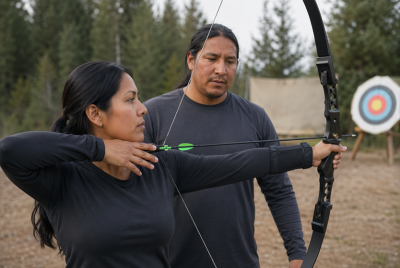
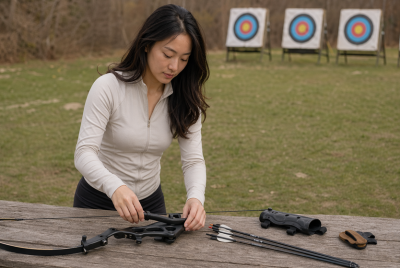
For your first archery session, bring simple, comfortable clothing, closed-toe shoes, water, and a willingness to…
Your First Month Of Archery: 5 Things To Focus On First
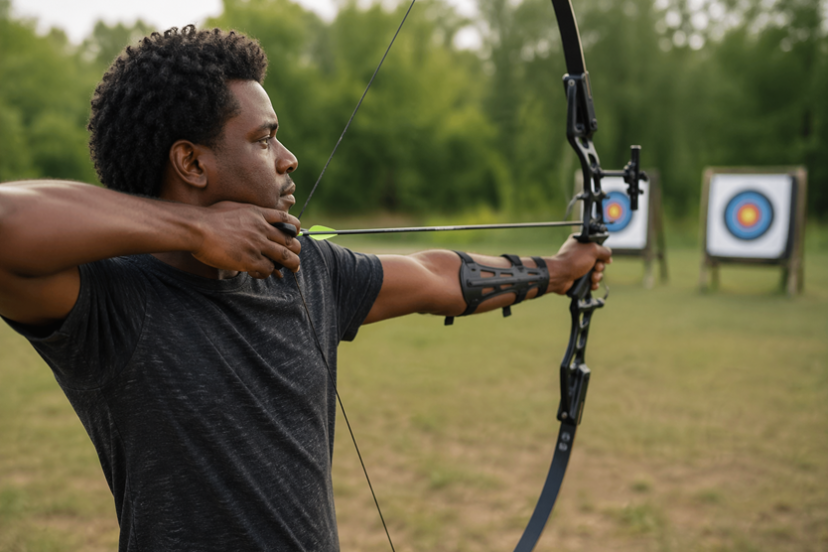
Your first month of archery should not be about chasing perfect scores, testing lots of gear, or trying to fix everything at once. It should be about building a few steady habits that make the rest of your shooting easier, safer, and more repeatable. In the beginning, the biggest wins usually come from focusing on stance, grip, anchor, shot rhythm, and simple practice consistency.
That is what this first month often feels like in real life. You may have a few shots that feel surprisingly good, followed by several that feel awkward again. Your arrows might group one end and scatter the next. You may not know whether the problem is your bow, your hands, your posture, or just inexperience. That uncertainty is normal early on.
The good news is that your first month does not need to answer every archery question. It just needs to give you a better foundation. If you focus on the right things first, you make future improvement much easier.
The first month is about repeatability, not impressiveness
A lot of beginners assume early archery progress should look dramatic. They expect tighter groups every session, instant comfort with the shot process, or fast confidence with distance. In reality, the first month is usually about learning how to repeat a basic shot with less tension and less confusion.
That matters because archery depends on consistency. If your body position changes from shot to shot, or if your draw and anchor move around, it becomes very hard to understand what is actually happening. Small inconsistencies can create bigger-looking accuracy problems than most beginners realize.
So the first goal is not to become advanced. It is to become steady enough that your shooting starts making sense.
Start with a stance you can come back to
One of the first things to focus on is your stance. Not because stance alone solves everything, but because it gives the rest of the shot somewhere stable to begin.
In your first month, a useful stance is one that feels balanced, calm, and easy to repeat. You should not feel like you are leaning, bracing, or fighting to stay in position. If your lower body feels unsettled, the rest of the shot often starts compensating for that instability.
This is also one of the first places beginners overcomplicate things. They worry about exact foot angles, highly technical positioning, or copying another archer perfectly. What matters more early on is having a stance that you can return to with minimal thought and minimal tension.
A steady stance supports safety and control too. When you are balanced and organized before the draw, you are less likely to rush, twist awkwardly, or develop habits that make shooting feel unstable.
Learn what a relaxed bow hand really feels like
Another major early focus is grip, especially the bow hand. Many new archers unintentionally squeeze the bow because they want control. That feels logical at first, but it often makes the shot less clean and less consistent.
A tense grip can add unnecessary movement, interfere with natural bow reaction, and make it harder to understand why arrows are landing where they are. It can also make the whole shot feel more effortful than it needs to be.
What helps here is a simple reframe: holding the bow is not the same as clamping the bow. Your hand needs to support the bow without trying to overpower it. That difference often takes time to feel.
This is easy to misunderstand because archery tools look precise, and beginners often assume precision must come from tighter control. In practice, good control usually comes from cleaner structure and less unnecessary tension.
Build a reliable anchor before worrying too much about scores
In the first month, anchor deserves a lot of attention because it helps create shot-to-shot consistency. If your draw hand settles in a different place each time, everything downstream becomes harder to read.
A reliable anchor gives you a repeatable reference point. It helps your alignment, supports cleaner aiming habits, and reduces the guesswork that makes early shooting frustrating. When beginners feel inconsistent, anchor is often part of the reason, even if they are blaming something else.
This does not mean your anchor needs to look polished immediately. It means you should begin noticing whether it feels familiar and repeatable. If each shot finishes in a slightly different place on your face or jawline, your arrows may reflect that inconsistency even when the rest of the shot felt decent.
This is one of the most helpful early clarifications in archery: not every bad shot comes from aiming badly. Sometimes the shot was harder before the aim ever started.
Pay attention to rhythm, not just the release
Many beginners think the shot is mostly about what happens at the very end. They focus heavily on the release, the moment the string leaves, or whether the shot felt clean. But early progress usually improves more when you pay attention to overall rhythm.
A rushed shot often creates several smaller problems at once. Tension builds, anchor gets inconsistent, aim becomes impatient, and the release becomes reactive instead of calm. Then the archer tries to fix the ending, even though the shot became unstable much earlier.
In your first month, it helps to think in terms of flow rather than isolated moments. A smoother rhythm often produces a better ending without forcing it. That is especially important for beginners who start “trying to make the arrow go” instead of letting the shot happen from a more repeatable setup.
This matters for safety and form because rushed habits can turn into persistent habits. A calmer rhythm gives you more time to notice posture, hand tension, and control before the shot finishes.
Keep practice simple enough to repeat
One of the most important things to focus on in the first month is practice consistency. Not perfect practice. Not intense practice. Just practice that is simple enough to repeat without confusion.
A lot of beginners make the first month harder by constantly changing distance, trying too many tips at once, or treating every session like a test. That makes it difficult to tell whether you are actually improving. If the conditions keep changing, your feedback gets noisy.
Simple practice gives you something much more valuable than excitement: clarity. When you keep sessions organized and manageable, patterns become easier to notice. You can tell whether your anchor is settling in. You can tell whether your bow hand is getting calmer. You can tell whether your shot rhythm is improving.
This is also where many people start blaming gear too early. Equipment matters, but in the first month, most beginners benefit more from steady repetition than from chasing upgrades. Better form habits usually help more than extra equipment changes.
What usually gets beginners off track
The first month becomes harder when beginners expect too much too soon. That pressure often shows up in a few familiar ways.
One common pattern is trying to improve accuracy before building repeatability. Another is trying to solve every problem in one session. Some beginners also bounce between advice sources so quickly that they lose track of what they are practicing.
Another problem is assuming discomfort or inconsistency means failure. Early archery often feels uneven because your body is still learning unfamiliar movements. That does not mean you are doing badly. It usually means you are new.
It also gets harder when beginners treat random good shots as proof that they have “figured it out,” then feel discouraged when the next end looks different. In the first month, isolated good shots matter less than gradually becoming more organized and more repeatable.
A simple way to measure progress
In the first month, progress is often quieter than beginners expect. It may look like less fidgeting before the draw. A more familiar anchor. A steadier bow hand. A shot that feels less rushed. More awareness of what changed from one arrow to the next.
Those are real improvements. In many cases, they matter more than a temporary tight group.
That perspective helps reduce confusion. It reminds you that early archery is not just about where the arrow lands. It is also about whether the shot is becoming more understandable. When the process becomes clearer, improvement usually becomes more durable.
The first month should make you steadier, not overwhelmed
If you focus on stance, grip, anchor, shot rhythm, and simple practice consistency, your first month of archery will do what it is supposed to do. It will not make you finished. It will make you more stable.
That is a strong beginning.
You do not need to master everything right away. You need a few reliable patterns that make shooting safer, calmer, and easier to repeat. Once those start to settle in, the rest of archery becomes much less confusing and much more rewarding.

More to Explore